Today I’m delighted to welcome James Gault to the blog. James has kindly let me pick his brains about his writing. You can find out more below..
Welcome James, can you tell us a little about yourself?
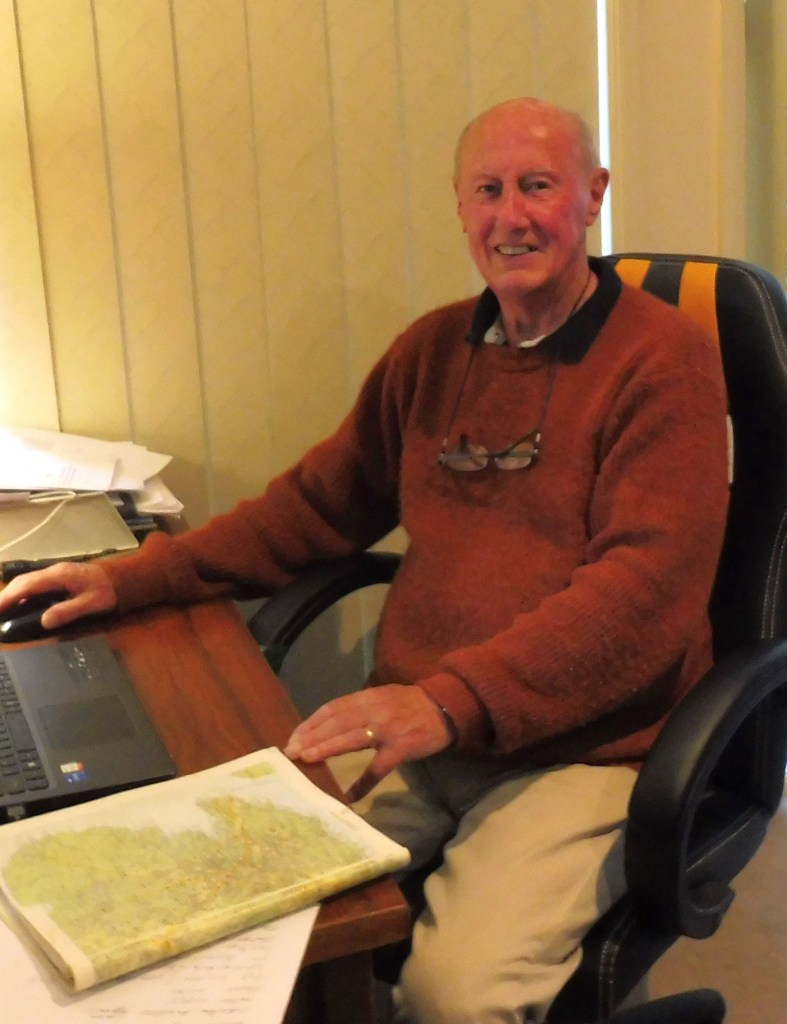
I have been a Navy man for most of my life – from driving a patrol boat around Papua New Guinea at age 22 to command of a destroyer and ultimately a Captain driving a desk. Somehow in between long and frequent deployments to sea I managed to marry a young English girl and together produced three wonderful children. As they tend to do, the children grew up and left home to make their own way through life. We now live in a small town on the Australian SE coast with a Labrador dog, surrounded by peace and tranquility.
How did you get into writing?
Tranquility is all very well, but when Covid and related ‘lock-downs’ strike anything adventurous is stifled. In the same period, television programs were universally awful. Some sort of escapism was called for. If I could not experience adventure myself, then it would need to be by vicarious means – through the written word. Accordingly, I penned three works of contemporary adventure fiction intended to sell like hotcakes. I now realise that no-one has been buying hot cakes recently!
What era do you write about, and what drew you to that time period(s)?
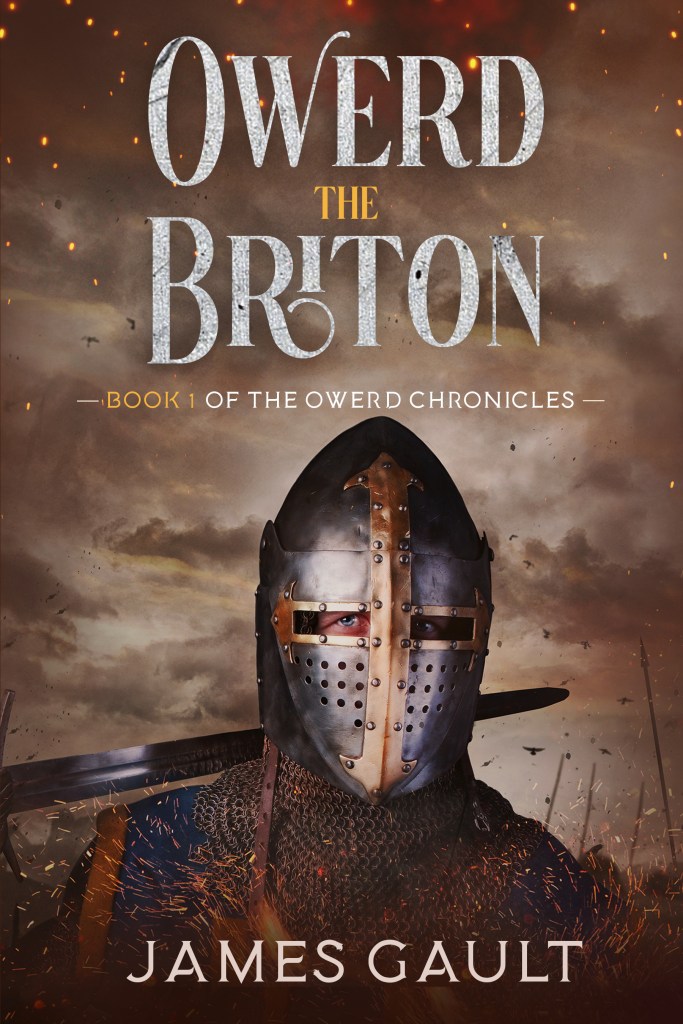
I presently focus on historical fiction. In pursuit of a theme for a new work I resorted to re-reading some classics that I had enjoyed. One was ‘Hereward the Wake’ by Charles Kingsley. It is a wonderful story but the reading was challenging, being couched as it is in 19th century vocabulary. I thought to offer a re-write in contemporary English but soon discovered that one cannot mess with a classic. Hence a new hero in the same era needed to be born and so it was that Owerd came on the scene, set in the late 11th century.
Can you tell us a little bit about your book?
In its simplest form, ‘Owerd the Briton’ is the tale of a disadvantaged youth who makes good. It is set in some of the darkest days for England, though there have been plenty of those over the centuries, when invasions loom – and in one case succeed. The Norman take-over of Anglo-Saxon England was not accomplished without enormous hardship for the inhabitants. While the average peasant would have cared little about whomever the current king might be, William the Conqueror’s reign, at least initially, was especially tyrannical. Englishmen would have been torn for years between rebellion or acceptance and these conflicting options permeate Owerd’s life. ‘Owerd the Briton’ has now become Book One in a series (‘The Owerd Chronicles’).
Where can people order your book?
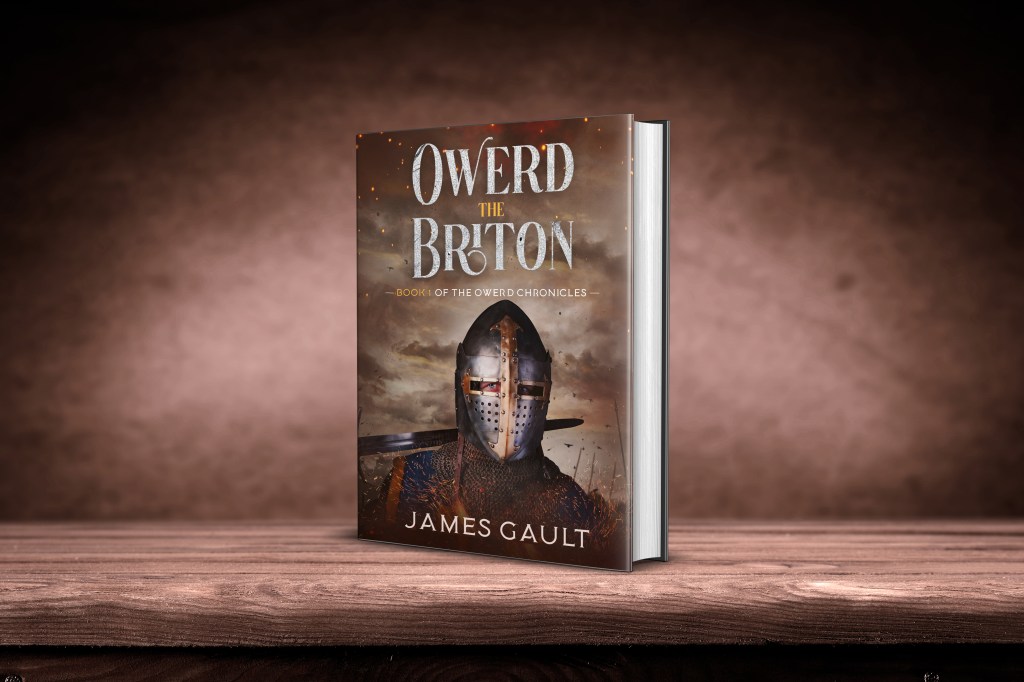
The book is available from Amazon
There is a ‘Universal Book Link” for other outlets at Books2read
Are you working on something at the moment? If so, can you spill the beans a little?
‘The Owerd Chronicles’ have grown into a trilogy. Book 2 is ‘Sea Lord’ and Book 3 is ‘King’s Warrior’, so readers can already see that Owerd’s rise in the world has continued, though not without turmoil, tragedy and risk. I am reluctant for our hero’s life to become predictable so I am working on a fourth in the series that could avoid that happening.
How do you go about your research?
As one might imagine, researching English history (and geography) from a small town in Australia is challenging. In the absence of other contemporary documents, the skeleton of the story is derived from ‘The Anglo-Saxon Chronicle’. From there I read and read! I still have my secondary school Atlas that allows for known events to be accurately situated and the works of others (‘The Oxford History of England’ and Wilton-Hall’s ‘Social Life in England Through the Centuries’ etc) add to the mix. Lacking ready access to the Bodleian Library or similar academic sources, I admit to some follow-up research for detail through Wikipedia, whilst acknowledging that always needs cross-checking. I attempt to be as accurate as possible in addressing the people, places, and events of the time, but I take some comfort from the fact that, after all is said, the work is fictional. No-one that I presently know was there at the time so I claim some indulgence for any errors.
Do you have a favourite historical source?
I would have to consider the Giles & Ingram version of ‘The Anglo-Saxon Chronicle’ as favourite despite the biases of the original monkish writers. It allows me sufficient leeway to then add my own biases about William I and the Normans.
If you could give one piece of advice to aspiring authors, what would it be?
I cannot in all conscience offer reliable advice to any aspiring writer. I would venture to suggest, though, that a key ingredient of success is to focus on subjects that interest you. Without your own interest being fully engaged then it is improbable that the reader’s interest will be.
Can you tell us your favourite fiction and favourite non-fiction book?
In terms of fiction, especially of the historical variety, it is hard to go past Bernard Cornwell’s ‘The Last Kingdom’ series but I suspect that I preferred Ken Follett’s ‘The Evening and the Morning’ as a thoroughly immersive read. For non-fiction my reading has been largely of a research nature lately rather than simple enjoyment (although it has been fun). For pleasure, I would have to nominate a book by Alan Lucas called ‘Cruising the Coral Coast’ as it takes me back to a more adventurous period of my life yachting in tropic waters.

James Gault is a former Naval Captain who has spent much of his adult life at sea in ships, boats, and yachts, developing a healthy respect for the power of nature in the process. He loves reading and writing historical fiction whilst retaining an abiding interest in historical fact. He now lives in a small coastal town in Australia.
You can find out more about James and his work using the following links:
Thank you James, it has been a pleasure!