
Genre: History, nonfiction
Publisher: Pen and Sword
Pub date: 9 July 2024

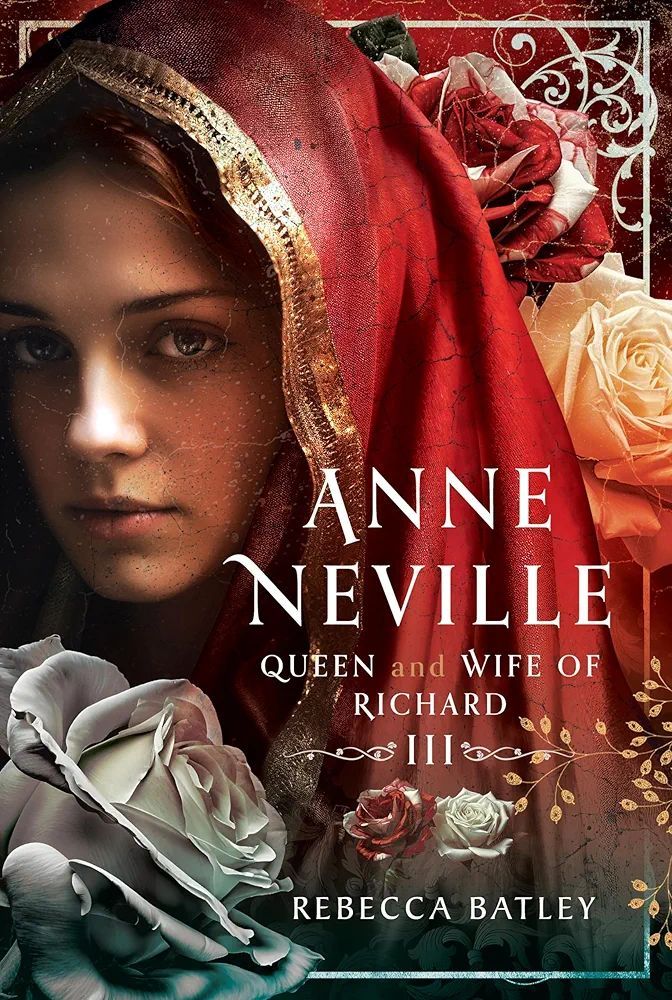
Daughter, Wife, Princess, Widow and Queen: Anne Neville had many faces. Shakespeare presents her to us as a woman consumed with rage, bitterness and grief. He has her cursing the killer of her husband and father, before marrying him and condemning herself to despair. She rages, screams and weeps but ultimately she is shown as nothing more than a passive victim of the men who used and exploited her. This could not be further from the truth. Born into one of the most powerful dynasties in medieval England, Anne knew her worth, and her power. She was a great survivor escaping the tide of blood that consumed England not just alive but emerging with a crown on her head. Tragedy would untimely engulf her, the death of her son ended all her hopes for a lasting legacy and her premature death was subject to rumour and speculation. But there is undoubtedly more to Anne than her marriage and her end. She is fascinating, elusive, a powerbroker and very much her father’s daughter. This is Anne’s story.

Having previously written Ann Walker, The Life and Death of Gentleman Jack’s Wife, I was intrigued to note that Rebecca Batley, though sticking with an individual named Ann(e), had gone back in time a few hundred years for her next book, Anne Neville.
Anyone with an interest in the Wars of the Roses knows the name Anne Neville. For most people, her existence and life is overshadowed by the male counterparts in her life, which is not surprising when her family was so closely linked to the royal family. Her father was Warwick, the Kingmaker, she married a Prince of Wales, and then a royal Duke who would become Richard III. There was no shortage of powerful men in Anne’s life, but she also had her own life to live.
Rebecca Batley has done an incredible feat of bringing Anne out of the shadows and giving her a voice of her own. She was not just the kingmakers daughter or a pawn in the marriage market. She was a remarkable woman who lived through a time of war and turmoil, ending her life as a queen.
Rebecca begins by setting the scene for events in England at the time when Anne was a child. Although this does take up a portion of the book, I really enjoyed reading about the period Anne was born into and the circumstances surrounding her childhood and family. As we go on, Anne really becomes her own person. Using the little evidence available, but with meticulous detail, Rebecca has managed to weave the pieces of Anne’s life together; her journey to France, her return as the wife of Edward, Prince of Wales, and despite war and many losses, her ultimate rise to power as queen of England through her marriage to the future Richard III.
For someone who died at what we would now think of as a young age, Anne witnessed and lived through an immensely eventful period in history, but she was not just a bystander. Her family, herself included, lived in the midst of these events and were often directly involved. Of course, there is some conjecture, but that is a result of the lack of surviving evidence, and the author does not force an opinion on the reader. Rather, it leaves some of the unknown open for interpretation.
Rebecca succeeds in her aim of dispelling the Shakespearean image of Anne that has lasted for centuries.
If you are interested in the Wars of the Roses, I would certainly recommend this. Rebecca has such an easy reading and clear style, making this an excellent read. I am very much looking forward to seeing what comes next from this author.
Anne Neville us available now from all the usual places, but if you’d like a copy with a signed bookplate, please consider ordering from the wonderful independent book shop Fox Lane Books

Rebecca Batley is by profession an archaeologist and historian with over 20 years experience and a particular interest in women’s history. She has worked for the Museum of London, the Louvre, Wessex Archaeology, TVAS, EACHTRA and various archives. She is also a writer who has had her work published in publications such as New Scientist, Nautilus, History Scotland and the Essex Journal of Archeology.



 Amy McElroy