
On Christmas Eve I am thrilled to welcome Darren Freebury-Jones to my blog. Darren has kindly answered a whole bunch of questions about his latest book so let’s get into it!

Tell us a little about yourself.
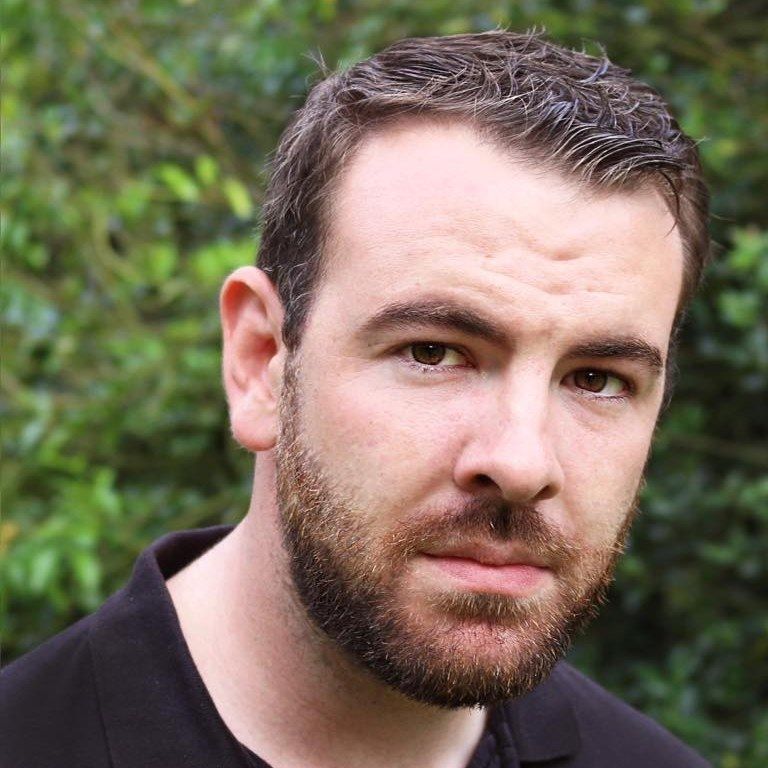
I’m a Cardiff-born author of poetry and several books on Shakespeare and his contemporaries. I’m also a Fellow of the Royal Historical Society. I lecture on Shakespeare in his hometown of Stratford-upon-Avon. I thoroughly enjoy public speaking and have a background as an actor.
How did you get into writing?
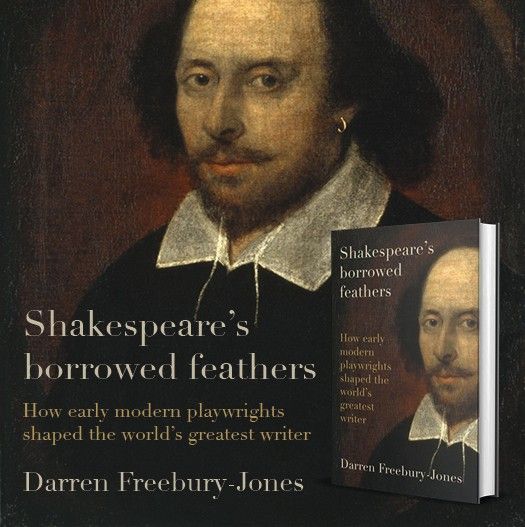
I’ve always loved writing, be it fiction, poetry, drama, or academic writing. I have a compulsion to create and find writing to be at once a relaxing and paradoxically stressful pastime! I particularly enjoyed writing my latest effort, Shakespeare’s Borrowed Feathers: How Early Modern Playwrights Shaped the World’s Greatest Writer. As a trade book, it gave me the opportunity to conflate my academic and creative writing and paint vivid pictures of the playmaking community in which Shakespeare worked.
Can you tell us a little bit about your book Shakespeare’s borrowed feathers?
The book anchors Shakespeare in his historical and theatrical context. It looks at the ways in which the education system during the period, as well as Shakespeare’s role as an actor-playwright, informed his artistry. It also casts new light on the ways Shakespeare interacted and sometimes even collaborated with other playwrights whose lives and works intersected with his career trajectory. The book aims to enhance our understanding of Shakespeare’s creative genius while highlighting the work of several other electrifying dramatists of the Elizabethan and Jacobean eras.
What initially drew you to Shakespeare?
I first encountered Shakespeare through studying Julius Caesar at high school, and I have a distinct memory of memorizing Sonnet 18 as a teenager, ‘Shall I compare thee to a summer’s day’, and feeling empowered by reciting such beautiful language. I really got the bug, however, when studying King Lear at college. That is Shakespeare’s arguably most profound, and bleakest, play, a memento mori to kingship. It’s a monstrous work for a sixteen-year-old to tackle, but it really unlocked something in me and every time I re-read the play, I gain a new perspective, reflecting changes in my lived experiences and personality, I guess. Shakespeare combines my passions for history, language, and theatre.
How do you think Shakespeare has affected modern society?
Shakespeare often wrote about historical processes, and those processes tend to recur. I frequently encounter parallels with Shakespeare plays whenever I switch on the news. For me, Shakespeare is an intrinsic part of our global DNA. His works have been translated into over 100 languages and are read and performed all over the world. His stories, usually adapted from earlier sources, are in turn adapted into a variety of genres, from The Lion King to Hag-seed to She’s the Man. The great thing about Shakespeare is that he tends to voice both sides of an argument, as he would have been taught to do at school. The result of this interpretative malleability is that we can collaborate with Shakespeare, make our own meanings, and adapt him just as he adapted the works of other writers.
Do you think Shakespeare had a role model? If so, who?
I think Shakespeare had several role models, and that is very much what Shakespeare’s Borrowed Feathers is about. Take the playwright John Lyly for example, whose comedies feature cross-dressing heroines, parallelism between noble and lower-class characters, battles of wit, and the incorporation of song in drama. Without Lyly’s earlier efforts we wouldn’t have Shakespeare’s comedies, such as A Midsummer Night’s Dream or Twelfth Night, certainly not in the form we know them.
Shakespeare was deeply influenced by Christopher Marlowe, the muscularity of his ‘mighty line’, his overreaching protagonists such as Doctor Faustus, his flawed rulers such as King Edward II, and his Machiavellian schemers like Barabas. A frequently overlooked role model for Shakespeare was Marlowe’s roommate in London, Thomas Kyd, most famous for his blockbuster The Spanish Tragedy, the Gone with the Wind, Titanic, or Avengers: Endgame of the Elizabethan period. That’s a play featuring a ghost crying for revenge, murder in a garden plot, and a play-within-a-play used for vengeful purposes. Without Kyd, we might not have plays like Hamlet or King Lear.
Shakespeare’s Borrowed Feathers charts Shakespeare’s engagement with various playwrights, from Lyly in the 1580s all the way to John Fletcher, with whom Shakespeare collaborated on plays such as Henry VIII towards the end of his career.

Do you have a favourite Shakespeare play?
I see King Lear and Hamlet as Shakespeare’s greatest artistic achievements. I’m especially fond of the tragedies! I have a real soft spot for Titus Andronicus, which features fourteen deaths, mutilation, decapitation, and concludes with a mother being tricked into eating her own sons who’ve been baked in a pie… It’s bonkers and in my experience always works excellently on stage, whether creatives decide to go down the road of slapstick comedy, brutal gorefest, or torture of the imagination. It’s now widely recognized that Shakespeare co-authored Titus Andronicus with an older dramatist named George Peele, so this play was one of the first I studied in terms of authorial collaboration. It was a formative play for Shakespeare, his first tragedy, but also for me in terms of my research interests.
Are you working on something at the moment? If so, can you spill the beans a little?
I am Associate Editor for The Collected Works of Thomas Kyd, with General Editor Sir Brian Vickers, published by Boydell and Brewer. I’m also General Editor for The Collected Plays of Robert Greene with Edinburgh University Press. So I’m hard at work on these editions of works by major Elizabethan dramatists who were on the scene when Shakespeare kickstarted his career.
How do you go about your research?
My PhD supervisor at Cardiff University, Martin Coyle, advocated writing as research, and that’s my approach. I’m always framing my sentences as I imbibe information. I’m often inspired by talks I give to audiences from around the world, the fascinating discussions they generate on a range of Shakespeare-related topics. As a father to two little boys, the physical act of writing tends to take place by candlelight when the family are asleep, an image I sometimes conjure when I think of Shakespeare composing his plays.
Where can people order your book?
Shakespeare’s Borrowed Feathers is available in all good bookstores and can be ordered online via Amazon or the Manchester University Press website.
If you could give one piece of advice to aspiring authors, what would it be?
My advice would be the same as given by the Dutch humanist Desiderius Erasmus, who instituted the grammar school education as Shakespeare would have known it: read as many different types of author in order to fill up your storehouse. Reading as widely as possible, in a variety of genres, will help you develop your own approaches to writing and your authorial voice.
Lastly, as it’s the festive season, can you tell us how Shakespeare would have celebrated Christmas?
Tradition holds that Shakespeare tended to go back to his home in Stratford-upon-Avon at least once a year, so I like to imagine that he’d take some time off writing and acting in plays in London to be with his family. However, his playing company, the Lord Chamberlain’s Men, which became the King’s Men in 1603 when James I ascended the throne, were often called upon to partake in Christmas and New Year celebrations. So Shakespeare would likely spend the Christmas period preparing to perform before the monarch at court.

Dr Darren Freebury-Jones is author of the monographs: Reading Robert Greene: Recovering Shakespeare’s Rival (Routledge), Shakespeare’s Tutor: The Influence of Thomas Kyd (Manchester University Press), and Shakespeare’s Borrowed Feathers (Manchester University Press). He is Associate Editor for the first critical edition of The Collected Works of Thomas Kyd since 1901 (Boydell and Brewer). He has also investigated the boundaries of John Marston’s dramatic corpus as part of the Oxford Marston project and is General Editor for The Collected Plays of Robert Greene (Edinburgh University Press). His findings on the works of Shakespeare and his contemporaries have been discussed in national newspapers such as The Times, The Guardian, The Telegraph, The Observer, and The Independent as well as BBC Radio. His debut poetry collection, Rambling (Broken Sleep Books), was published in 2024. In 2023 he was elected a Fellow of the Royal Historical Society in recognition of his contributions to historical scholarship. He lectures on Shakespeare in Stratford-upon-Avon.
I do hope you have enjoyed reading this guest post. I have my copy of Shakespeare’s borrowed feathers already, but if I didn’t I would certainly be doing some last minute Christmas shopping for myself! I will happily admit I was thrilled with the mention of my favourite humanist Eramus, so thank you Darren!
If you’d like to know more about Darren and keep up to date with his work, you can find him on the below socials.
Wishing you all a very Merry Christmas and best wishes for 2025!


 Amy McElroy
[…] Interview for Amy McElroy (2024) […]
LikeLike