
Today, I have a wonderful guest on my blog, the fantastic Sharon Bennett Connolly! Sharon has shown me a wealth of support and such kindness since I began writing, so I couldn’t be more thrilled to have the opportunity to ask some questions!
Tell us a little about yourself.
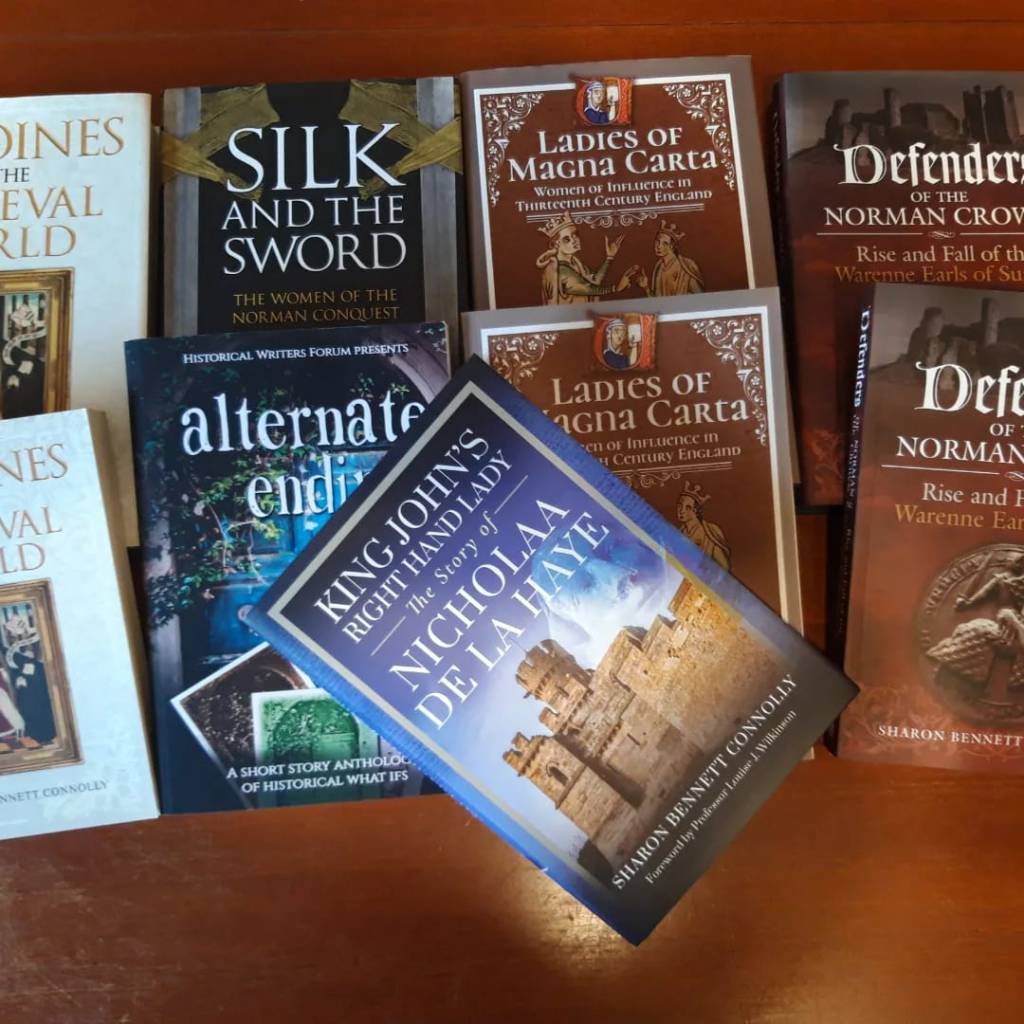
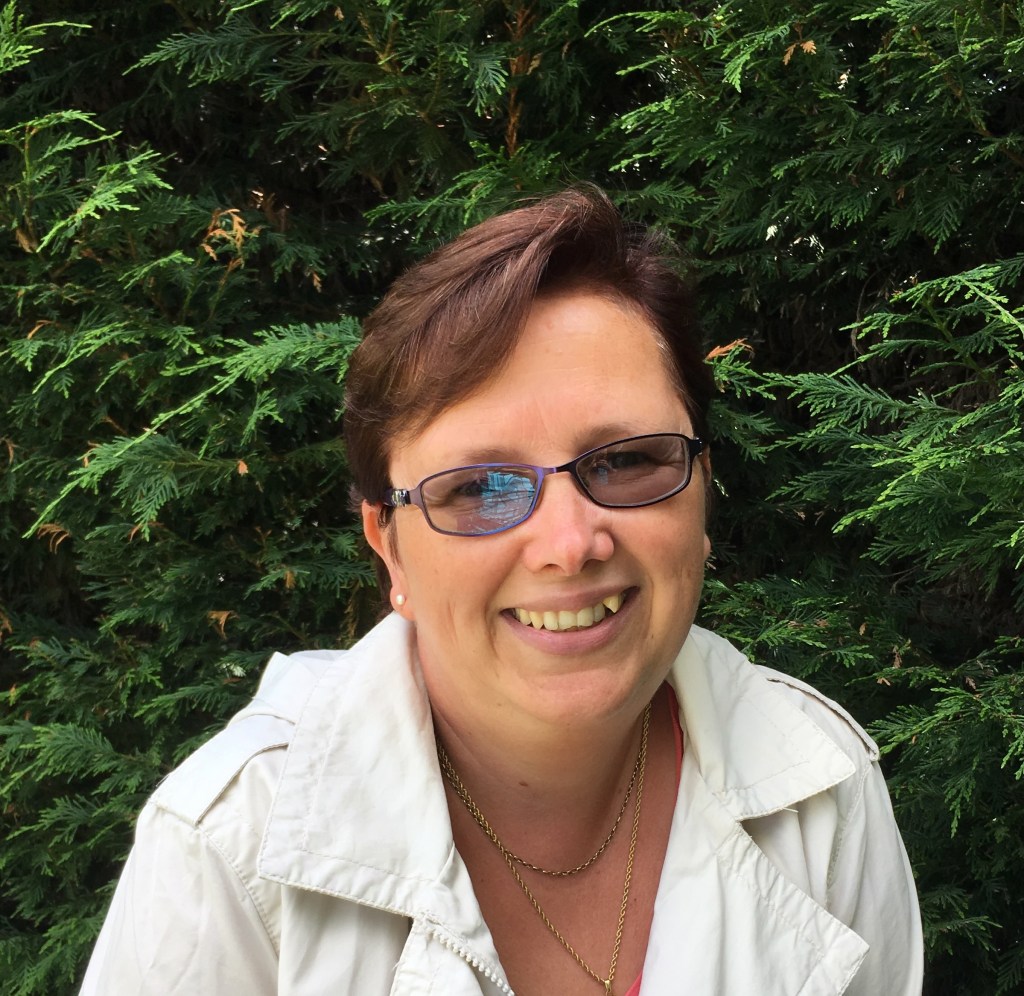
I’m a 5* something Yorkshire lass with a teenage son who has just started his 1st year at university. I have a fascination for History and write historical non-fiction, mainly about medieval women. I have published five books, so far, with book number 6 coming out in January. I am an elected Fellow of the Royal Historical Society, and have studied history academically and just for fun – I even worked as a tour guide at a castle for a while. I write the popular history blog, http://www.historytheinterestingbits.com, co-host a podcast, A Slice of Medieval, with historical fiction author Derek Birks and regularly give talks on women’s history. I have also written for All About History and The Historian magazines and been on TV – in Australian Television’s ‘Who Do You Think You Are?’

How did you get into writing?
I have always dabbled in writing. I thought I would write novels, but my story writing is sadly lacking in something. So, I stick with non-fiction. In 2014, my husband gave me a blog for Christmas, and I started writing and publishing short historical biographies, mainly on women.
Then, I saw a competition run by Amberley publishing, to get your first book published. I wrote a synopsis and chapter plan for Heroines of the Medieval World, but hesitated from entering – until 5 days before the competition closed, I decided to just send it in – what did I have to lose? Well, a few months later, I got an email saying that I hadn’t won – but they would like to publish my book anyway, if I was still interested.
My next thought was, ‘Bugger! I’ve got to write it now – how do you write a book?’
I’m glad I did it, though – there’s nothing like the feeling of holding your own book in your hands and realising ‘I wrote this!’
What era do you write about and what drew you to that time period(s)?
I write mainly medieval – though I do have a Tudor book coming out next year (a ‘sequel’ to Heroines of the Medieval World). I like the past to be a different world, and the medieval era really is. Writing about medieval women, though, is tough – there is not a lot of information on them, even the famous ones, and you have to root around to put their stories together.
It’s like solving a puzzle.
In writing about the women, I try to show that, though women’s’ rights were greatly restricted by – well, everyone, church, state, husbands – they still managed to do the remarkable, defend castles, rule countries, etc – all while raising children and running households.
Can you tell us a little bit about your most recent book?
I have two, sort of. My book, King John’s Right Hand Lady: the Story of Nicholaa de la Haye, came out in May. Nicholaa was amazing! Recently widowed, she defended Lincoln Castle against the French and rebel barons during the First Barons’ War of 1216/1217. She resisted the siege long enough for William Marshal to muster an army and march to her relief. As a result of Nicholaa’s stalwart defence, Marshal was able to inflict a crushing defeat on the rebels and their French allies, shortening the war considerably, on 20 May 1217 at the Battle of Lincoln Fair.

I also have a new book coming out in January 2024, Women of the Anarchy. An often-overlooked period in English history, and yet a pivotal one. It paved the way for the Plantagenet dynasty. I wanted to look at the experiences of two of the protagonists: Empress Matilda and her cousin, Matilda of Boulogne. Did you know the year 1141 is known as The War of the Two Matildas? Empress Matilda’s forces captured King Stephen at the beginning of the year and so it was Stephen’s wife, Matilda of Boulogne, who prosecuted the war on his behalf for most of the year – the only medieval war, that I can think of, where women were at the head of both factions.

It was a fascinating project, to focus on the women of the period and examine the impact they had on events – and their influences.
Where can people order your book(s)?
All my books are available on Amazon: http://viewauthor.at/SharonBennettConnolly
Are you working on something at the moment? If so, can you spill the beans a little?
I’m coming to the end of my current project, which is due in before Christmas and should be out in November 2024. It’s titled Scotland’s Medieval Queens and was inspired by my son studying Shakespeare’s Macbeth for his English Lit GCSE.
He came out of school one day and said ‘mum, Shakespeare really did a number on Macbeth’s wife, you should set the record straight.’
My response was ‘that’s not a bad idea!’
And Scotland’s Medieval Queens: From St Margaret to Margaret of Denmark was born – with a prologue dedicated to Gruoch, also known as Lady Macbeth.
How do you go about your research?
The internet is a godsend!
No longer do we have to traipse around the country, trying to get to libraries and archives. As much of my research as possible comes from contemporary chronicles and charters. Sites such as Archive.org and British History Online give me access to a fabulous collection of medieval material.
Most of my time is spent making copious notes, which makes it easier when it comes to writing up a project. Although … there is always that one nugget of information that I desperately want to include – but can’t find when I need it!
But then, I find it the day after I’ve sent the manuscript to my editor. Grr!
Do you have a favourite historical source?
My favourite chronicler is Henry of Huntingdon. He’s buried just down the road from me, at Lincoln Cathedral, and I always give him a nod of acknowledgement when I visit. He was a bit of a gossip but well connected and seemed to know everything that was going on. He wrote such a fabulous description of the 1141 Battle of Lincoln, that I think he must have been stood on the castle walls, watching.
My other favourite source is the Hyde (Warenne) Chronicle, which charts the early years of the Warennes, who were earls of Surrey. As I’m sure you can appreciate, it was invaluable to me when I was writing Defenders of the Norman Crown: Rise and Fall of the Warenne Earls of Surrey. Unfortunately, it ends in 1120, just before the White Ship sets sail from Barfleur and sinks, taking the heir to the English throne to the bottom of the ocean – talk about ending on a cliffhanger!
If you could give one piece of advice to aspiring authors, what would it be?
Just write!
The hardest bit is getting those first words down, but you have to just write – you can always change the words later (and probably will!), but the important thing is to start writing and keep writing, even if you have to force yourself to do it. Eventually, you will get into the flow and the words will spill out of you. Then, you won’t be able to stop.
Oh, and read! The more you read, the easier it is to write, and the better your vocabulary will be.
And last – but not least – enjoy it! You are creating – or, in my case, recreating – worlds. Have fun.
And, if you’re ever having a particularly difficult day, just imagine the finished book in your hands, that always does the trick for me.
Can you tell us your favourite fiction and favourite non-fiction book?
My favourite fiction book is The Three Musketeers by Alexandre Dumas, in French. I know it sounds pretentious to say the French version, but the novel does lose some of its humour in translation. I first read it in French at university (you wouldn’t have found a French language version at my local library, but the uni had a whole section of French novels). I was amazed that it has a different atmosphere to the English version; some of the humour gets lost in translation.
My favourite non-fiction is Kings and Queens of Britain by Joyce Marlow. I got it for Christmas when I was 9 and still adore it. It is well thumbed, and the dust jacket is torn and curls up at the corners from years of use, but the book itself is still pristine. I have spent hours, over the years, reading and re-reading the biographies of Richard the Lionheart, Robert the Bruce and Elizabeth I. It’s fabulous!
If you’d like to find out more about Sharon and keep up with her writing and books, you can find Sharon on the following links:
I cannot wait for the publication of Women of the Anarchy in January!
If like me, you’re looking forward to it, you can, of course, preorder!
Scotland’s Medieval Queens also sounds incredible!
Thank you so much to Sharon for joining me, it has been a pleasure.

 Amy McElroy